

Overview of the Playbook
Hey, if it’s your first time visiting our blog, thank you and welcome! We’re Reef Digital, a digital marketing agency in Sydney with depth of experience in the nonprofit sector and one of the few Google Ad Grants Certified agencies in Australia.
We’ve crafted this digital marketing guide for nonprofits based on our own experiences and the strategies that have worked for our clients in the digital world. Think of it as us sharing our playbook with you, filled with practical tips and insights that have helped our clients succeed.
What You Will Gain from Reading This Playbook
By diving into this playbook, you’ll walk away with:
- Clear and Achievable Goals: Set SMART goals to provide a structured path to success.
- Targeted Audience Engagement: Create detailed audience personas and use this information to improve messaging and engagement.
- Compelling Brand Messaging: Develop a clear brand identity and craft a narrative that resonates with your audience.
- Optimised Website Performance: Improve user experience, increase conversions, and enhance search engine rankings.
- Strategic Channel Selection: How to choose the right digital marketing channels to maximise your reach and impact.
- Data-Driven Improvements: What to measure and how to use analytics to inform the refinement of your marketing strategies.
This playbook is designed to be a practical, hands-on guide that draws from our own experience and the experience of working with our nonprofit clients in support of their digital marketing campaigns.
Let’s get started!
Step 1: Defining Your Goals
Setting clear and effective goals is crucial for the success of any digital marketing strategy. At Reef, we tend to follow the SMART goal philosophy, often with a three-layered target: Minimum, Target, Optimal (MTO).
- The minimum is the baseline success criteria
- The target is the desired achievement
- The optimal is the stretch goal for outstanding performance.
SMART goals ensure that your objectives are clear and achievable within a specific timeframe, providing a structured path to success.
You might be familiar with the SMART goal framework, but we’ve included it below for reference purposes and to ensure the completeness of this digital marketing guide for nonprofits.
- Specific:
- What it means: Your goal should be clear and specific. Rather than setting a vague objective like “increase donations,” specify what you want to achieve
- Example: Increase the number of monthly donors by 50 within six months.
- Measurable:
- What it means: You need to be able to track your progress and measure the outcome
- Example: Configure tracking in GA4 to record metrics such as donation amounts, engagement rates, sign ups and form submissions.
- Achievable:
- What it means: Your goal should be realistic and attainable. It’s important to set goals that challenge your nonprofit but are also possible to achieve given the resources and time you have.
- Example: Based on current growth rate and available resources, an achievable goal is felt to be “increasing email subscriber rates by 15% in three months”.
- Relevant:
- What it means: Ensure your goal is relevant and aligned with your nonprofit’s mission and overall objectives. It should matter to your organization and drive you forward.
- Example: We want to “launch a new educational program” – is the initiative and content relevant to your mission of improving education in remote communities?
- Time-bound:
- What it means: Every goal needs a target date, so you have a deadline to focus on and something to work toward. This helps prevent everyday tasks from taking priority over your longer-term goals.
- Example: “Raise $50,000 for the annual campaign within the four month period from April-August,” provides a clear timeline for fundraising efforts.
How We Implement SMART Goals at Reef: Every nonprofit is different, so as part of the onboarding and activation process, we work with you to assign what we call the ‘Critical Numbers’ (the most important metrics we need to move) and supporting KPIs (other important metrics that, if moved, will likely move the critical numbers).
With critical numbers and supporting KPIs identified, we then apply the SMART goal setting framework when setting targets, ideally with three levels of targets as per the MTO approach mentioned earlier. Things evolve, so reviewing these quarterly in conjunction with the performance and learnings from the past quarter is recommended.
With overaching goals set, you should repeat this process for determining what each channel ideally needs to deliver in order for digital marketing to hit its goal.

Benchmarking: Closing The Gap
Before setting out to achieve your goals, and even before setting them, it’s crucial to understand where you currently stand. This involves a thorough benchmarking process to identify the gap between your current state and your desired outcomes.
Benchmarking should start at the high level – as in what digital marketing is delivering currently / previous period or year – but also at the channel level.
With the benchmarks, goals and gaps in place, all strategic planning can now be focused on closing the gap to hit the goals.

Step 2: Identifying Your Audience
Creating Detailed Audience Personas
We tend to find that the level of target audience collateral varies among nonprofits. Some organisations have up-to-date, comprehensive personas, while others may have older data that needs refreshing. Regardless of where you stand, refining your audience personas is crucial for effective digital marketing.
Creating detailed audience personas involves understanding not just the demographics but also the psychographics, traits, beliefs, and behaviours of your supporters. Here’s why this depth of knowledge is essential and how we go about it.
Why Detailed Audience Personas Matter:
- Targeted Marketing: Knowing your audience allows you to test and tailor your messaging, ensuring it resonates with the right people. You might find that speaking to different psychographics of the persona improves the engagement or conversion rate.
- Efficient Resource Use: Focus your efforts on the most receptive segments, maximising your return on investment.
- Improved Engagement: Personalised content and communication lead to higher engagement and stronger supporter relationships.
Key Elements of Audience Personas:
- Triggering Events: Identify the events that motivate your audience to take action, such as personal experiences or societal changes. These events could be anything from a natural disaster to a personal milestone that aligns with your cause, prompting immediate engagement and support.
- Jobs to be Done: Understand what your audience aims to achieve, whether it’s supporting a cause, volunteering, or seeking community. This helps tailor your messaging to show how engaging with your nonprofit fulfills their specific needs and aspirations.
- Pain Points: Recognize the challenges and frustrations your audience faces, which your nonprofit can help alleviate. Addressing these pain points directly in your communications can significantly increase engagement and support.
- Limiting Beliefs: Identify the misconceptions or barriers that might prevent your audience from engaging with your nonprofit. Overcoming these beliefs with clear, factual information can remove obstacles to engagement. These are usually internal voices that start with “I don’t…”, “It won’t…”, “I can’t…”
- Desired End Results: Clarify what success looks like for your audience after engaging with your nonprofit. This includes the impact they want to see and the personal satisfaction they gain from contributing to a cause they care about.
- Key Purchase Drivers: Understand the factors that influence your audience’s decision to donate or support. These can include the urgency of the cause, the perceived impact of their contribution, and the trust they have in your organization.
- Influencers: Know who and what influences your audience, from social media personalities to media, to friends and family. Leveraging these influencers or at least being aware of what they are saying and in what ways they are influencing your audience, can help with your messaging and amplification.
- Media Consumption: Identify where your audience gets their information and spends their time online. This ensures your messages are seen by the right people, whether it’s through social media, email newsletters, or specific websites.
- Before and After State: Define how your audience’s state of mind and situation improve after engaging with your nonprofit, in addition to the transformation their support facilitates and achieves. Speaking to these transformations (internal / aspirational identity, day in the life, perceived by others) can make your appeals more compelling.
- Customer Journey: Map out the emotional and actual journey your audience takes from discovery to interest, intent, convert and beyond. Understanding this journey helps you create targeted touchpoints that guide supporters seamlessly from one stage to the next.
Identifying Common Values Across Personas
Identifying common values across your audience personas is essential for creating unified and compelling messages that resonate broadly, and for when marketing to specific personas isn’t available or practical.
Common values are the core beliefs and priorities that your diverse supporters share – things they all care about as it relates to your nonprofit. By pinpointing these shared values, you can craft messages that speak to the heart of what matters most across the breadth of your diverse audience.
Why This Information is Crucial for Nonprofits
For nonprofits, the desired action isn’t about purchasing a product or service. Instead, it’s about fostering a deeper connection and commitment to a cause. The aim is usually to inspire actions like donating, volunteering, or advocating, which stem from emotional and motivational triggers rather than transactional benefits.
By understanding the intricate details of what drives your audience, including their pain points, motivations, and influencers, your nonprofit can craft more compelling messages and create meaningful engagement strategies. This approach ensures that every interaction resonates on a personal level, ultimately driving more significant support and long-term loyalty to your cause.
How We Gather This Information:
- Surveys and Interviews: Collect direct feedback from your team and supporters to understand audience motivations, challenges and why they did or didn’t choose your cause to support and advocate for.
- Analytics Tools: Use tools like ChatGPT, Google Analytics, audience research, competitor analysis and more, to gather data on target audience behaviour and preferences.
- Social Listening: Monitor social media platforms to gain insights into what your audience is talking about and what influences them.

Segmentation & Targeting
Once you have detailed audience personas, you can decide on the level of segmentation you want to use in your marketing or campaign strategy and across different channels.
1. Types of Segmentation:
Demographic Segmentation:
- What it involves: Segmenting based on age, gender, income, education, etc.
- Example: Tailoring content for younger supporters on TikTok while focusing on Facebook for older donors.
Psychographic Segmentation:
- What it involves: Segmenting based on values, interests, lifestyles, and personality traits.
- Example: Creating content or campaigns that resonate with environmentally conscious supporters versus those passionate about social justice.
Behavioural Segmentation:
- What it involves: Segmenting based on actions and behaviours such as donation history, event participation, and online engagement.
- Example: Sending personalised thank-you emails to frequent donors and special invitations to active volunteers.
Geographic Segmentation:
- What it involves: Segmenting based on location, which can be particularly useful for local nonprofits or events.
- Example: Promoting a local fundraising event to supporters within a specific city or region.
2. Implementing Segmentation in Your Marketing:
Tailored Content Creation:
- Develop different types of content that cater to each segment’s interests and preferences. For example, create blog posts that address the specific concerns of each persona.
- Depending on resources, goals and priorities, we sometimes rotate through the personas with the content calendar, ensuring we speak to all individually (e.g week 1 = persona 1, week 2 = persona 2, etc)
- If resources are a bit tight, it might be better to use the ICP (ideal customer profile – common values) for your main, ‘always on’ content strategy. This will depend on your goals too though.
Personalised Communication:
- Use personalised email campaigns that address supporters by name and reference their past interactions with your nonprofit.
Targeted Advertising:
- Use segmentation to create targeted ads on social media and search engines, ensuring that your messages reach the most relevant audience.
- Again, this will depend on available resources and the addressability of the audience on the platform. Oftentimes today, it’s broad audience targeting with the messaging and creative used to do the bulk of the targeting and leaning on the algorithm to match the message with the intended audience
By creating detailed audience personas and implementing the right level of segmentation for your goals and resources, your nonprofit can ensure that its marketing efforts are highly targeted and impactful, leading to greater engagement and support for your cause.

Step 3: Defining Your Brand, Mission & Messaging
This is usually handled outside of our agency as branding isn’t part of Reef’s services (messaging and copywriting are though), but no digital marketing playbook for nonprofits would be complete without at least briefly covering this important component of the strategy.
Purpose:
- Why the Organisation / Brand Exists: Your mission statement should clearly articulate the purpose of your nonprofit. It should answer the question, “Why does your organisation exist?”
- Example: “Empowering underserved communities through education and sustainable development.”
Values:
- Core Principles: Identify the core values that guide your organisation’s actions and decisions. These values should reflect your nonprofit’s ethics, beliefs, and standards.
- Example: Integrity, inclusiveness, sustainability, and empowerment. You can help to bring these to life and add more context by adding statements to the effect of “We always…” and “We never…”
- Integrity:
- We always: act with honesty and transparency in all our dealings.
- We never: compromise our principles for short-term gains.
- Integrity:
- Example: Integrity, inclusiveness, sustainability, and empowerment. You can help to bring these to life and add more context by adding statements to the effect of “We always…” and “We never…”
Identity / Voice:
- Brand Personality: Establish a consistent tone and style for your communications. Your brand voice should align with your organization’s identity, whether it’s formal, friendly, authoritative, or approachable.
- Example: A warm, engaging, and supportive tone that resonates with community members.
Positioning:
- Unique Value Proposition: Define what sets your nonprofit apart from others. Position your organisation in a way that highlights your unique impact and approach. Think about the ‘villain’ you might be positioning against or the big problem your organisation solves.
- Example: “We combat the cycle of poverty and lack of educational resources in underserved communities.
- The ‘villain‘ we face (position against) is systemic inequality that prevents access to quality education and sustainable development opportunities.”
- Example: “We combat the cycle of poverty and lack of educational resources in underserved communities.
Brand Story and the StoryBrand Framework:
- Crafting Your Narrative: We like the StoryBrand framework to create a compelling brand story that connects emotionally with your audience. This includes defining the hero (your audience), their problem, your solution, and the success they achieve.
- Example: “Jane, a single mother, faced numerous challenges in providing for her children. Through our programs, she gained skills and support, transforming her life and ensuring a brighter future for her family.”
Messaging Pillars and Messaging Framework:
- Key Themes: Develop messaging pillars that consistently convey your nonprofit’s core themes and values. It’s what someone can expect whenever they engage your organisation. These pillars should be reflected across all communication channels and what associations you want people to make with your organisation and brand. Communications are therefore from the point of view of your messaging pillars and purpose.
- Example: Empowerment, Education, Sustainability, Community.
- Supporting Messages: Create a messaging framework that includes core messages, supporting messages, and taglines. Ensure these messages are adaptable for various platforms and audiences.
- Example:
- Core message: “We empower individuals through education.”
- Supporting message: “Our programs provide the skills and knowledge needed for sustainable development.”
- Example:
By defining your purpose, values, identity, positioning, and crafting a compelling brand story, along with establishing clear messaging pillars, your nonprofit will be well-equipped to communicate its mission effectively and resonate deeply with your audience.

Step 4: Website
Optimising your nonprofit’s website is essential to enhance user experience, drive conversions, and improve search engine rankings. At Reef, we focus on four key areas to ensure your website is both effective and impactful: website architecture, UX and user journeys, conversion, and SEO.
Website Architecture
- Structure and Navigation:
- Clear Hierarchy: Design your website with a clear hierarchical structure. Ensure that primary navigation menus are intuitive and easily accessible, allowing users to find essential information quickly.
- Logical Organisation: Group related content into categories and subcategories. This helps users understand where to find information and improves overall site usability. It also helps with SEO, link equity flowing between the correct pages, relevance to keyword search and topical authority.
- Internal Linking: Implement a robust internal linking strategy to connect related pages and guide users through their journey on your site. This also helps search engines understand the structure of your website.
- Responsive Design:
- Mobile Optimisation: Ensure your website is fully responsive and works seamlessly on all devices, including desktops, tablets, and smartphones. Mobile optimisation is critical as a significant portion of users will access your site via mobile devices and Google looks at mobile-first indexing.
- Page Load Speed:
- Fast Loading Times: Optimise images, leverage browser caching, and minimize HTTP requests to improve page load speed. Fast-loading pages enhance user experience and reduce bounce rates.

UX and User Journeys
- User-Centered Design:
- User Research: Conduct user research to understand your audience’s needs, preferences, and behaviors. Use this data to inform design decisions and create a user-centered website.
- Accessible Design: Ensure your website is accessible to all users, including those with disabilities. Use alt text for images, ensure keyboard navigability, and follow WCAG guidelines.
- Intuitive Navigation:
- Simple Menus: Design simple, easy-to-understand navigation menus. Use clear labels and limit the number of menu items to avoid overwhelming users.
- Breadcrumbs: Implement breadcrumb navigation to help users understand their location within the site and easily backtrack if necessary.
- Engaging Content:
- Visual Appeal: Use high-quality images, videos, and graphics to create an engaging and visually appealing website. Visual content can help convey your message more effectively.
- Clear Calls-to-Action (CTAs): Place prominent and compelling CTAs throughout your site to guide users towards desired actions, such as donating, signing up for newsletters, or volunteering.
- User Journeys:
- Defined Pathways: Map out user journeys to ensure that users can easily navigate from one part of the site to another. Create pathways that guide users toward key conversion points.
- Personalisation: Use personalisation techniques to tailor content and recommendations based on user behavior and preferences.

Conversion
- Optimised Landing Pages:
- Focus on Conversion: Design landing pages with a clear focus on conversion. Use compelling headlines, persuasive copy, and strong CTAs to encourage users to take action.
- Minimal Distractions: Remove unnecessary elements from landing pages to keep users focused on the conversion goal.
- Forms and Sign-Ups:
- Simple Forms: Simplify forms to reduce friction. Only ask for essential information to increase the likelihood of completion.
- Clear Benefits: Clearly communicate the benefits of completing a form or signing up, such as access to exclusive content, updates, or event invitations.
- Trust Signals:
- Social Proof: Use testimonials, case studies, and reviews to build trust with your audience. Highlight partnerships, certifications, and endorsements to enhance credibility.
- Security Features: Ensure your website uses HTTPS and display security badges to reassure users that their information is safe.

SEO
- Keyword Research:
- Identify Relevant Keywords: Conduct thorough keyword research to identify relevant terms and phrases your audience is searching for. Map primary and secondary keywords to relevant pages on your site. Identify any content gaps where you don’t have a relevant page that meets the needs of a group of keywords.
- Long-Tail Keywords: For your blog (or equivalent) section, focus on long-tail keywords that are less competitive and more specific to your nonprofit’s mission, the problems you are solving and solutions to those problems.
- On-Page SEO:
- Meta Tags: Optimise meta titles, descriptions, and headers with relevant keywords. Ensure each page has unique and descriptive meta tags.
- Alt Text for Images: Use descriptive alt text for images to improve accessibility and help search engines understand the content of your images.
- Content Optimisation:
- Quality Content: Create high-quality, valuable content that addresses the needs and interests of your audience. Regularly update your content to keep it fresh and relevant.
- Internal Linking: Use internal links to connect related content and improve site navigation. This helps search engines crawl your site more effectively.
- Technical SEO:
- Conducting a regular technical SEO audit ensures that your site remains accessible, functional, and optimised for both search engines and users. Some key elements include:
- Site Speed and Performance: Evaluate your site’s load times and overall performance
- Mobile-Friendliness: Ensure your site is fully optimised for mobile devices
- Crawl Errors and Indexability: Identify crawl errors and issues with indexing. Ensure that all important pages are indexed by search engines.
- Broken Links and Redirects: Identify and fix broken links and incorrect redirects.
- Schema Markup: Implement structured data (schema markup) to help search engines understand your content better and improve the appearance of your search engine results with rich snippets.
- Duplicate Content: Detect and resolve duplicate content issues that can confuse search engines and dilute your rankings.
- Conducting a regular technical SEO audit ensures that your site remains accessible, functional, and optimised for both search engines and users. Some key elements include:
By focusing on website architecture, UX and user journeys, conversion optimisation, and SEO, your nonprofit can create a highly effective website that engages users, drives conversions, and ranks well in search engines.

Step 5: Choosing The Right Channel Mix For Your Nonprofit Digital Marketing Strategy
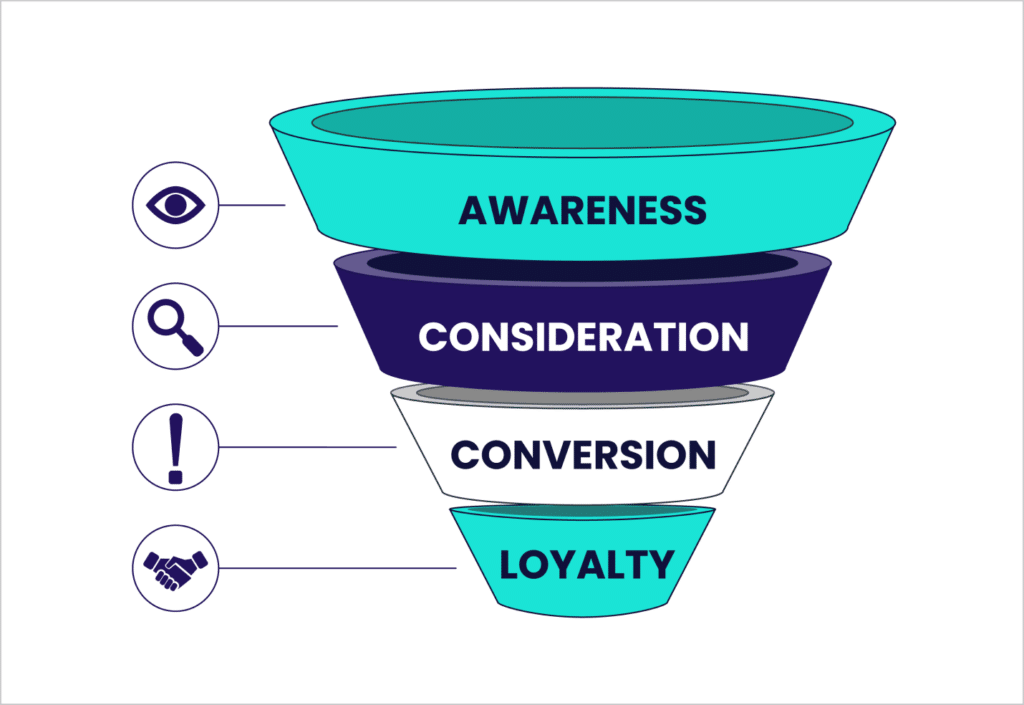
Selecting the optimal mix of digital marketing channels is essential for aligning your nonprofit’s objectives. When choosing your channel mix, we like this think about the stages of the marketing funnel—awareness, consideration, and conversion – and the levels of awareness of the target audience.
This ensures that you are communicating the right message through the right channel to guide your audience from being unaware of your cause to becoming engaged supporters and donors.
Of course available budget, resources and the objectives of the campaign will dictate how you choose your channels and allocate budgets.
Here’s an overview of how we like to think of things in case useful for when you need to choose the right channel mix for your nonprofit digital marketing strategy.
Top of the Funnel: Awareness
Objective: Increase brand visibility and attract a broad audience.
- Audience Awareness: Unaware to Problem Aware
- Unaware: The audience is not aware of your cause or the problem you are addressing.
- Problem Aware: The audience recognises the problem but is not yet aware of your nonprofit as a solution, or any solutions to the problems.
- Channels:
- Content Marketing:
- Purpose: Educate and inform the audience about the problem through blogs, articles, videos, social posts and creative.
- Example: Creating blog posts about the impact of poverty and lack of educational resources in underserved communities.
- Earned Media:
- Purpose: Gain visibility through media coverage, guest posts, and influencer mentions.
- Example: Collaborating with influencers or media outlets to feature stories about your nonprofit’s mission.
- Paid Advertising:
- Purpose: Use paid ads on social media and search engines to reach a wider audience quickly.
- Example: Running Facebook and Instagram ads that highlight the issues your nonprofit addresses.
- Outbound Marketing:
- Purpose: Reach out directly to potential supporters through email newsletters and cold outreach.
- Example: Sending introductory emails to segmented lists explaining the problems your nonprofit aims to solve.
- Content Marketing:
Middle of the Funnel: Consideration
Objective: Engage the audience and nurture interest.
- Audience Awareness: Problem Aware to Solution Aware
- Solution Aware: The audience understands that there are solutions to the problem and is looking for options.
- Channels:
- Content Marketing:
- Purpose: Provide in-depth information about how your nonprofit addresses the problem through detailed guides, case studies, and webinars. Also start trying to grow your email list through lead magnets such as quizzes, competitions, checklists and resouces
- Example: Publishing case studies that showcase successful projects and their impact.
- Example Lead Magnet: “Quiz: Which Volunteer Role is Right for You?”
- Earned Media:
- Purpose: Continue building credibility through testimonials, reviews, and third-party endorsements.
- Example: Sharing positive testimonials from beneficiaries and endorsements from well-known figures in your field.
- Paid Advertising:
- Purpose: Nurture interest and keep your audience engaged by providing valuable content and reminders tailored to their previous interactions. Promote lead magnet offers to grow your subscribers.
- Example: Use Facebook Lead Ads to offer a downloadable guide on how supporters can get involved, or run retargeting ads to remind previous visitors about upcoming webinars or events they showed interest in.
- Outbound Marketing:
- Purpose: Follow up with engaged prospects via personalised emails and nurture sequences.
- Example: Sending follow-up emails with additional resources and invitations to webinars.
- Referral / Affiliate:
- Purpose: Leverage partnerships to reach new audiences through referrals.
- Example: Partnering with other nonprofits or businesses to cross-promote each other’s efforts.
- Content Marketing:
Bottom of the Funnel: Conversion
Objective: Drive specific actions such as donations, sign-ups, or volunteer commitments.
- Audience Awareness: Solution Aware to Brand and Most Aware
- Brand Aware: The audience knows about your nonprofit and understands how you can solve the problem.
- Most Aware: The audience is aware of the specific ways they can support your nonprofit, such as donating or volunteering.
- Channels:
- Content Marketing:
- Purpose: Create compelling content that drives action, such as donation pages, volunteer sign-up forms, and impact reports.
- Example: Developing landing pages with clear calls-to-action for donations or volunteer sign-ups.
- Paid Advertising:
- Purpose: Target people with strong call to action messaging.
- Example: Using Google Ads and social media ads to capture demand and get people to take action.
- Outbound Marketing:
- Purpose: Use direct outreach to finalise conversions, such as phone calls or personalised emails.
- Example: Sending personalised emails or making phone calls to prospects who have attended your webinars or downloaded resources.
- Referral / Affiliate:
- Purpose: Encourage your current supporters to bring in new donors or volunteers through referral programs.
- Example: Implementing a referral program where existing supporters can refer friends and family for rewards or recognition.
- Content Marketing:
Balancing Budget, Resources, and Objectives
- Budget Considerations:
- Top of the Funnel: Allocate a portion of your budget to broad-reaching channels like content marketing and paid ads to maximize visibility and drive traffic.
- Middle of the Funnel: Create lead magnets to grow your email list, invest in engagement channels like email marketing, and ensure content and paid include middle of funnel messaging.
- Bottom of the Funnel: Focus budget on conversion-driven channels like high intent search with optimized landing pages, retargeting ads, and strong action driven messaging with content and paid advertising.
- Objective Alignment:
- Ensure that each channel you choose aligns with your overall marketing objectives and use your experience to weight resources accordingly, bearing in mind the audience, their level of awareness and their journey.
By strategically selecting and balancing your channels based on audience awareness and stages of the marketing funnel, your nonprofit can create an effective and sustainable digital marketing strategy that guides your audience from awareness to conversion. Now, let’s explore each channel in detail to help you make informed decisions about your digital marketing efforts.
Always On vs. Campaigns in Your Channel Mix
When developing a digital marketing strategy, it’s important to balance “always on” activities with targeted campaigns. Both approaches serve distinct purposes and are essential for a well-rounded channel mix.
Always On
Purpose: To maintain continuous engagement and visibility, ensuring that your audience remains connected and informed about your nonprofit’s activities at all times, generating and capturing demand.
- Consistent Content Marketing:
- Example: Regularly publishing blog posts, videos, and social media updates to keep your audience informed and engaged with your cause.
- Benefits: Builds brand loyalty, keeps your audience engaged, and consistently drives traffic to your website.
- Ongoing Social Media Engagement:
- Example: Posting daily updates on social media platforms, responding to comments, and engaging with followers to foster a sense of community.
- Benefits: Maintains a steady presence, increases brand awareness, and nurtures relationships with supporters.
- Regular Email Newsletters:
- Example: Sending monthly newsletters with updates, success stories, and upcoming events to your subscribers.
- Benefits: Keeps your supporters informed, nurtures donor relationships, and encourages ongoing engagement.
- SEO and Content Optimisation:
- Example: Continuously optimising your website content for search engines to improve organic visibility and attract new visitors.
- Benefits: Ensures your website remains discoverable, driving consistent organic traffic.
- Always-On Advertising:
- Example: Running ongoing Google Ads or social media ads targeting your key audience segments.
- Benefits: Provides a steady stream of visibility and leads, supporting continuous growth.

Campaigns
Purpose: To generate a burst of activity and engagement around specific goals or events, creating a sense of urgency and encouraging immediate action.
- Fundraising Campaigns:
- Example: Running a month-long fundraising campaign with a specific monetary goal and thematic focus.
- Benefits: Generates focused attention and urgency, driving higher levels of donations in a short period.
- Awareness Campaigns:
- Example: Launching a campaign during a specific month dedicated to your cause (e.g., Breast Cancer Awareness Month) to raise awareness and educate the public.
- Benefits: Capitalises on heightened interest and relevance, attracting new supporters and media attention.
- Event Promotion:
- Example: Promoting an upcoming gala, webinar, or volunteer event through targeted ads, email blasts, and social media posts.
- Benefits: Increases event attendance, boosts engagement, and encourages participation.
- Advocacy Campaigns:
- Example: Organising a campaign to support a specific policy change or advocacy effort, mobilising your base to take action.
- Benefits: Drives collective action and raises the profile of your advocacy efforts.
- Matching Gift Campaigns:
- Example: Launching a limited-time matching gift campaign where donations are matched by a sponsor up to a certain amount.
- Benefits: Creates urgency and doubles the impact of donations, motivating more people to give.
Balancing Always On and Campaigns
- Integrated Strategy:
- Example: Maintain a steady flow of educational content, social media posts, and email updates while planning targeted campaigns throughout the year.
- Benefits: Ensures continuous engagement and visibility while driving spikes in activity and support during key times.
- Resource Allocation:
- Example: Dedicate a portion of your budget and resources to ongoing activities, reserving additional funds and effort for high-impact campaigns.
- Benefits: Maximises the effectiveness of your marketing efforts by leveraging the strengths of both approaches.
- Data-Driven Decisions:
- Example: Use analytics to monitor the performance of both always-on activities and campaigns, adjusting your strategy based on what works best.
- Benefits: Enhances the efficiency and impact of your marketing efforts through continuous improvement.

By balancing always-on activities with targeted campaigns, your nonprofit can maintain a consistent presence while also generating bursts of engagement and support at critical times. This integrated approach ensures that your marketing strategy is both sustainable and dynamic, driving continuous growth and impact.
Google Ad Grants for Nonprofits
Purpose: Leverage free advertising credit to increase visibility, drive traffic, and attract new supporters.
Google Ad Grants provide nonprofits with up to $10,000 USD per month in free advertising on Google Search, allowing your organisation to reach a broader audience and amplify your digital marketing efforts.
This should be an always-on activity due to its continuous ability to generate visibility and traffic at no cost. However, there are restrictions, so choosing the right keywords based on search volume and competition is key. Incorporating features such as dynamic ad groups can enhance performance if you have grant spend available to use.
Additionally, combining Google Ad Grants with robust content marketing strategies will help you maximise the impact, ensuring that you have sufficient content on the site to promote via the Google Grant account.
Step 6: Data, Analytics & Reporting
Measuring Your Customer Conversion Journey
In the digital marketing landscape for nonprofits, understanding and optimising the Customer Conversion Journey (CCJ) is crucial. This involves mapping data analytics to each stage of the journey, measuring relevant metrics, and using these insights to improve and optimise your strategies.
Here’s how to approach this for each stage of the CCJ, tailored specifically for marketers at nonprofits.
1. Awareness Stage
Objective: Increase visibility and attract new visitors.
Key Metrics to Monitor:
- Impressions: Number of times your content is displayed.
- Reach: The number of unique users who see your content.
- Website Traffic: Total visits and unique visitors from various sources (organic, social, referral).
Improvement and Optimisation Areas:
- Content Quality: Ensure that your content is engaging and relevant to attract more visitors.
- SEO Performance: Optimise keywords, meta tags, and content structure to improve search engine rankings.
- Social Media Engagement: Boost social media activity to increase reach and drive traffic.
Metric Influence:
- Traffic to Engagement: Increased website traffic should lead to higher engagement and subscribers if the content is relevant and compelling.
2. Engagement Stage
Objective: Foster interactions and build a connection with your audience.
Key Metrics to Monitor:
- Bounce Rate: Percentage of visitors who leave your site after viewing only one page.
- Average Session Duration: The average time users spend on your site.
- Page Views per Session: The number of pages viewed per visit.
Improvement and Optimisation Areas:
- Content Relevance: Ensure your content addresses the needs and interests of your audience.
- User Experience: Improve site navigation and load times to enhance user experience.
- Interactive Elements: Include interactive content like quizzes, surveys, and videos to engage users.
Metric Influence:
- Engagement to Conversion: Higher engagement typically leads to better conversion rates, as users are more likely to take action when they are invested in the content.
3. Subscription Stage
Objective: Convert visitors into subscribers and leads.
Key Metrics to Monitor:
- Email Sign-Ups: Number of new email subscribers.
- Lead Conversion Rate: Percentage of visitors who become leads.
- Form Completion Rate: Percentage of visitors who complete sign-up forms.
Improvement and Optimisation Areas:
- Lead Magnets: Offer valuable incentives for signing up, such as checklists, quizzes, exclusive access, or webinars.
- Form Optimisation: Simplify sign-up forms to reduce friction and increase completion rates.
- Call to Action (CTA): Ensure CTAs are clear, compelling, and prominently placed.
Metric Influence:
- Conversion Rates: An increase in email sign-ups and lead conversion rates can lead to higher donation rates and volunteer sign-ups in subsequent stages.
4. Conversion Stage
Objective: Encourage actions such as donations, event registrations, or volunteer sign-ups.
Key Metrics to Monitor:
- Conversion Rate: Percentage of leads who take the desired action.
- Average Donation Size: The average amount donated per transaction.
- Event Registration Rate: Number of users registering for events.
Improvement and Optimisation Areas:
- Landing Page Optimisation: Ensure landing pages are persuasive and optimised for conversions.
- Donation Process: Simplify the donation process to reduce drop-offs.
- Personalised Appeals: Use personalised messages to appeal to individual donors.
Metric Influence:
- Retention Rates: High conversion rates can positively impact donor and volunteer retention rates if the initial experience is positive.
5. Retention Stage
Objective: Maintain engagement and loyalty among donors and volunteers.
Key Metrics to Monitor:
- Donor Retention Rate: Percentage of donors who continue to support over time.
- Repeat Donation Rate: Frequency of repeat donations.
- Volunteer Retention Rate: Percentage of volunteers who continue to participate.
Improvement and Optimisation Areas:
- Follow-Up Communications: Regularly update donors and volunteers on the impact of their contributions.
- Exclusive Content: Provide exclusive content and benefits to retain engagement.
- Feedback Mechanisms: Implement feedback loops to understand and address supporter needs.
Metric Influence:
- Lifetime Value: Improved retention rates lead to higher lifetime value of donors and volunteers, providing a steady and reliable support base.
6. Advocacy Stage
Objective: Encourage supporters to advocate for your cause.
Key Metrics to Monitor:
- Social Shares: Number of times your content is shared on social media.
- Referral Traffic: Traffic generated from referrals by advocates.
- Net Promoter Score (NPS): Measure of supporter satisfaction and likelihood to recommend your nonprofit.
Improvement and Optimisation Areas:
- Advocacy Programs: Develop structured advocacy programs that provide supporters with tools and resources to promote your cause.
- Storytelling: Encourage advocates to share personal stories and experiences.
- Incentives: Offer recognition and incentives for active advocates.
Metric Influence:
- Reach and Awareness: Advocacy efforts can significantly increase your reach and awareness, bringing new supporters into the awareness stage.
Using Data to Make Informed Decisions
1. Holistic Analysis:
- Cross-Metric Analysis: Understand how different metrics influence each other. For example, increased website traffic (awareness) should lead to higher engagement rates if the content is relevant.
- Funnel Optimisation: Regularly review the performance at each stage of the funnel and identify bottlenecks. If engagement rates are high but conversion rates are low, focus on improving the consideration to the conversion stage.
2. Continuous Improvement:
- Iterative Testing: Conduct A/B testing to optimise various elements such as CTAs, email subject lines, and landing page designs.
- Feedback Integration: Use feedback from supporters to refine strategies and improve user experience.
3. Strategic Adjustments:
- Data-Driven Strategy: Use data insights to adjust your marketing strategies. If a particular campaign drives high engagement but low conversions, analyse the landing pages, content and CTAs to make necessary adjustments. Also consider whether it is driving the first touch, while impacting conversions at a later touchpoint, perhaps in other channels.
- Resource Allocation: Allocate resources based on performance data. Invest more in high-performing channels and strategies while refining or discontinuing underperforming ones. Keep the Customer Conversion Journey in mind though, as pulling back in a channel driving a lot of awareness for example, could negatively affect overall marketing performance, even if on the surface it appears as though that channel isn’t driving conversions.
By mapping data analytics to the Customer Conversion Journey, monitoring key metrics at each stage, and using these insights to inform your decisions, your nonprofit can optimise its digital marketing efforts. This approach ensures that every stage of the journey is effectively managed and continuously improved, leading to greater engagement, higher conversions, and stronger supporter relationships.
Conclusion
Recap of Key Points Covered in the Playbook
Throughout this digital marketing playbook for nonprofits, we’ve shared essential strategies and insights based on our experiences at Reef Digital, helping nonprofits thrive in the digital landscape. Here’s a brief recap of the key points:
- Defining Your Goals:
- Set clear, SMART goals to guide your digital marketing strategy.
- Use the MTO (Minimum, Target, Optimal) framework to create achievable and aspirational targets.
- Identifying Your Audience:
- Develop detailed audience personas that include demographics, psychographics, and behaviors.
- Use segmentation to tailor your marketing efforts and maximise impact.
- Defining Your Brand, Mission & Messaging:
- Clearly articulate your nonprofit’s purpose and values.
- Craft a compelling brand story using the StoryBrand framework.
- Establish consistent messaging pillars that resonate with your audience.
- Website Optimisation:
- Focus on website architecture, UX and user journeys, conversion optimisation, and SEO to create an effective and engaging website.
- Choosing the Right Channel Mix:
- Align your channels with the stages of the marketing funnel: awareness, consideration, and conversion.
- Balance always-on activities with targeted campaigns to maintain continuous engagement and drive specific actions.
- Data, Analytics & Reporting:
- Measure and optimise your customer conversion journey using relevant metrics at each stage.
- Use data insights to make informed decisions, improve strategies, and allocate resources effectively.
Encouragement and Next Steps for Implementing Your Nonprofit Digital Marketing Strategy
Embarking on a comprehensive digital marketing strategy can be a challenging yet rewarding journey. At Reef Digital, we’ve seen firsthand the positive impact that a well-executed strategy can have on a nonprofit’s mission. Here are some next steps to help you implement the strategies outlined in this playbook:
- Start Small, Scale Up:
- Begin with a few key initiatives that align with your immediate goals and resources. As you gain confidence and see results, gradually scale up your efforts.
- Leverage Your Team and Tools:
- Utilize the skills and strengths of your team members. Invest in tools and platforms that can help streamline your processes and amplify your efforts.
- Monitor and Adjust:
- Regularly review your performance metrics and adjust your strategies based on what’s working and what’s not. Be prepared to pivot and try new approaches as needed.
- Engage and Listen to Your Audience:
- Keep your audience at the center of your strategy. Engage with them regularly, listen to their feedback, and use their insights to refine your approach.
- Stay Informed and Inspired:
- Stay updated with the latest trends and best practices in digital marketing. Join industry groups, attend webinars, and read relevant blogs to keep your knowledge fresh.
- Celebrate Your Successes:
- Take time to celebrate your achievements, no matter how small. Recognise the hard work of your team and the support of your donors and volunteers.
By following the strategies outlined in this digital marketing playbook for nonprofits, you can build a strong digital presence, engage your supporters more effectively, and drive meaningful impact for your nonprofit. Remember, every step forward is progress. Stay committed, stay passionate, and keep pushing towards your goals.
Good luck, and let’s make a difference together!